Here’s How to Develop and Strengthen Your Leadership Skills
Leadership is not a static trait—it’s a dynamic set of behaviors, perspectives, and disciplines that can be deliberately developed. Whether you’re managing a team, launching a business, or guiding a community initiative, leadership hinges on one’s ability to influence others toward shared goals.
Key Takeaways at a Glance
Self-awareness and active reflection are the foundations of authentic leadership.
Effective communication, empathy, and feedback loops define strong teams.
Practical exposure—through mentoring, volunteering, or leading projects—cements skills better than theory alone.
Advanced learning programs provide formal frameworks for complex decision-making and strategic growth.
Continuous improvement—via checklists, feedback, and deliberate practice—turns potential into long-term influence.
Build from the Inside Out: Self-Awareness and Reflection
Every capable leader begins with self-knowledge. Recognizing personal biases, communication styles, and emotional triggers helps prevent reactive or inconsistent decision-making. Keeping a leadership journal or seeking 360-degree feedback can illuminate blind spots and guide improvement.
Quick list of reflective habits that boost leadership clarity:
Daily or weekly journaling on critical interactions and lessons learned
Soliciting structured feedback from peers or mentors
Identifying “energy drains” (activities or people that deplete focus)
Setting quarterly learning goals
Communicate, Don’t Just Instruct
Clarity and empathy are the dual pillars of strong communication. Leaders who express their vision plainly—and listen actively—build environments of psychological safety and trust. The best communicators translate complex strategy into simple, motivating direction.
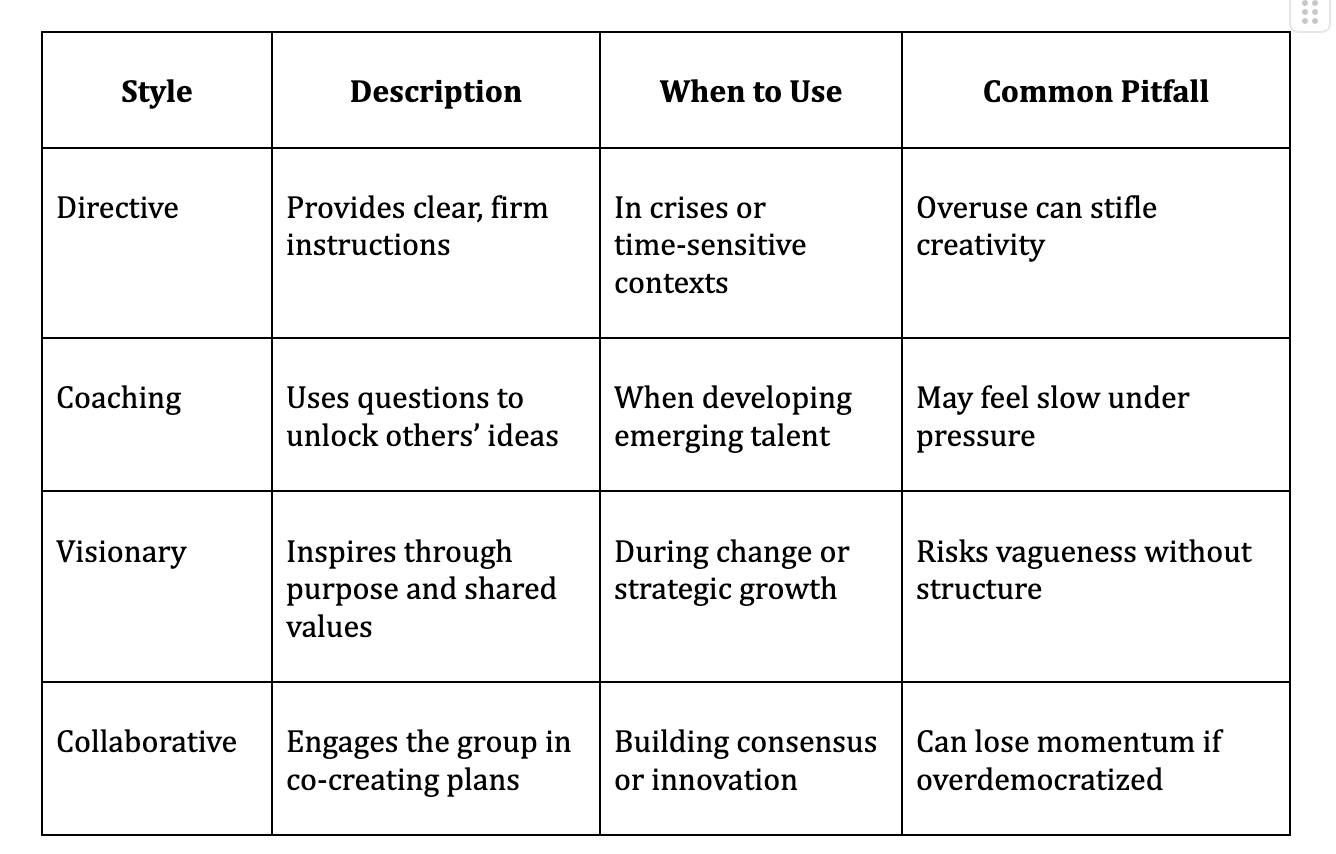
Table: The Leadership Communication Spectrum
Learn by Leading: Practice in Motion
Leadership matures through application, not theory. Seek opportunities that test resilience and adaptability—like managing cross-functional projects, mentoring interns, or volunteering for community boards.
Each stretch assignment sharpens real-world decision-making.
Before starting any new leadership challenge:
Define what success looks like for the team and for yourself.
Establish measurable goals and checkpoints.
Communicate expectations early and often.
Empower others with clear ownership of outcomes.
Conduct post-project reviews to identify learning moments.
Formal Education as a Catalyst
Advanced formal education can deepen leadership effectiveness, particularly for those managing change across complex systems. A program such as an online doctorate educational leadership integrates flexible online learning with research-based coursework and ethical leadership training. It equips professionals to handle strategic decisions, governance, and organizational transformation—skills critical across education, business, nonprofit, and public service sectors.
The combination of flexibility, academic rigor, and a real-world capstone project allows working professionals to evolve into reflective, strategic leaders.
Sustaining Growth Through Mentorship and Networks
Mentorship is leadership in miniature: it teaches influence through guidance, not authority. Building reciprocal relationships—both as mentor and mentee—creates a feedback-rich environment for sustained improvement. Joining professional associations or peer-learning circles amplifies visibility, confidence, and accountability.
Networking actions that strengthen leadership capacity
Attend one leadership-focused event or workshop each quarter
Engage with diverse professional groups to broaden perspectives
Offer mentorship to at least one colleague or student yearly
Document outcomes from mentorship conversations for reflection
Common Questions About Developing Leadership Skills
Before wrapping up, here are frequent questions leaders ask as they work to grow:
1. Can leadership truly be learned, or is it innate?
Leadership draws on personality but is refined through behavior. Self-awareness and intentional practice allow anyone to enhance their influence, regardless of natural temperament.
2. What’s the most important skill for a new leader to build first?
Empathy. It enables better listening, fairer decisions, and stronger trust—qualities that anchor every other leadership behavior.
3. How can I strengthen leadership if I’m not in a management role?
Lead projects, mentor peers, or spearhead initiatives in your community. Leadership is about responsibility and influence, not title or rank.
4. Do formal degrees actually make someone a better leader?
They provide frameworks and tools. Programs emphasizing ethics, strategy, and organizational psychology help leaders make higher-quality, evidence-based decisions—especially in complex environments.
5. How do I measure progress as a leader?
Track both tangible and relational metrics: team performance, retention rates, and feedback quality. Periodically revisit your original leadership goals to assess how much your decision-making and influence have matured.
6. What should I do when leadership feels overwhelming?
Pause to recalibrate. Overextension is a common hazard. Reconnect with mentors, delegate where possible, and realign around core values and priorities.
Conclusion
Developing leadership is not a single milestone, it’s an ongoing discipline. True leadership combines clarity of vision, ethical consistency, and continuous learning. By pairing self-reflection with deliberate practice and structured education, any professional can evolve from managing tasks to inspiring people. In essence, strong leaders aren’t born—they’re built, one conscious decision at a time.